
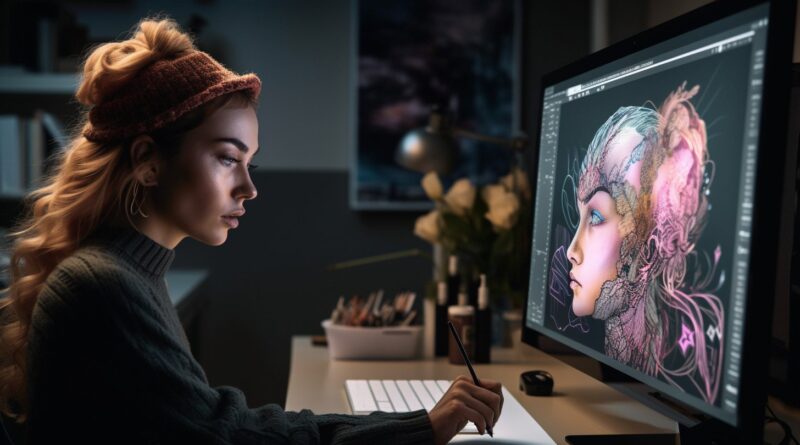
Why AI Art Digital Products Are Changing the Industry Forever
Artificial Intelligence (AI) is not a product of the future anymore; it is already redefining industries worldwide. Makers of digital products are some of the largest beneficiaries. AI artworks modify the way artists make, create, and market digital content, such as clipart collections and printables, branding packages, and stock illustrations. These applications present new possibilities to businesspeople, designers, and sellers on the internet.
Here we shall explore the way AI Art Digital Product, its benefits and shortcomings, and the implications of the change, both to the makers and the consumers of products.
What Is AI Art?
AI art is an art that is produced by artificial intelligence systems that have been trained using millions of images, styles, and patterns. The user will provide a text input, and the generator will generate illustrations, paintings, icons, and graphics.
These tools can create:
- Digital clipart
- Watercolor illustrations
- Seamless patterns
- Stickers and SVGs
- Printables and planners
- Character designs and concept art.
AI has now created professional-quality images even for individuals with no design training.
The AI Art Digital Product Industry
There is the issue of digital products depending on speed, creativity, and scalability. The AI-generated art only provides three dimensions.
Faster Product Creation
Hours or days can be spent in the traditional Sell digital art production. AI technology allows designers to generate dozens of designs within minutes. That speed allows sellers to:
- Launch products faster
- Test multiple niches
- Respond quickly to trends
An example is a 30-pack clipart package, which took weeks to complete, and can now be completed in a day.
Lower Barrier to Entry
Prior to AI Art Digital Industry required great illustration abilities for designers. With AI, it would eliminate that obstacle by allowing:
- Amateurs create marketable designs.
- Production costs are reduced by small businesses.
- Freelancers expand their services.
This has seen a rush of independent sellers on Etsy, Gumroad, WooCommerce, and others.
The Changing Nature of AI Art in Digital Products
Diversification of Product Lines
AI has expanded the range of products that can be sold online, including:
- Clipart collections (seasonal, kawaii, fantasy).
- Printable wall art
- Children’s activity sheets
- Journals and planners
- Small business branding components.
This diversity allows sellers to cater to a large number of audiences and niches.
Customization at Scale
AI allows designers to customize a single underlying design to various audiences:
- Alter color palettes
- Adapt cultural themes
- Create seasonal versions
- Add personalization
This scale increases the revenue and does not create a lot of workload.
Improved Visual Quality
The current AI systems generate fine, high-resolution works of art, which can be commercially used. Most designs of AIs compete with hand-drawn illustrations in quality and are available at a lower price to buyers.
Effects on the Sellers of Digital Products
Increased Competition
Another factor that increases the competition is the ease of entry of AI. Compared to hundreds of new sellers, thousands of new sellers can manufacture similar products. Sellers need to differentiate on:
- Unique prompts
- Targeted niches
- Strong branding
- SEO optimization
Movement in the Direction of Branding and Storytelling
Branding is essential as images are becoming simpler to produce. Effective sellers are now more focused on:
- Product storytelling
- Clear use cases
- Emotional attachment with buyers.
- Consistent brand identity
AI is a tool; strategy matters.
Potential Advantages of AI Art to the Digital Product Industry
Cost Efficiency
AI lowers costs such as:
- Hiring designers
- Buying stock assets
- Outsourcing illustration
It allows the sellers to price competitively and maintain margins.
Increased Innovation
AI promotes fast testing. Investors can evaluate new concepts without wasting either time or money, resulting in:
- More creative products
- unique visual styles
- trend‑driven designs
Global Market Access
The products produced by AI Art Digital Industry can be distributed all over the world immediately. Sellers have the option of making designs tailored to:
- Different languages
- Cultural aesthetics
- International holidays
This international coverage increases revenue.
Difficulties and Ethical Concerns
Copyright and Authorization Issues
A major worry is copyright. Sellers must:
- Commercial use of AI tools.
- Learn about platform-specific licensing.
- Do not imitate the styles of copyrights too much.
Long-term success heavily relies on transparency and moral utilization.
Market Saturation
Ease of production can push the market with poor quality or duplicated designs. Quality control and originality gain more and more significance.
Buyer Trust
Other purchasers are fond of art created by humans. Effective communication on the quality of the product, the rights to use it, and its value creates trust even in the case of the use of AI tools.
Future of AI Art in Digital Products
AI Art Digital Industry is not designed to substitute human creativity; it complements it. Future trends include:
- Improved AI-human cooperation tools.
- More personalized products
- Higher levels of buyer customization.
- Increased interest in managed, high-end packs.
Artists who fuse AI performance and human wisdom and approach will dominate.
SEO Advice on the Sale of AI Art
To succeed, focus on SEO:
- Keyword‑rich titles
- Detailed descriptions
- Use‑case–focused content
- Educative and traffic-generating blog posts.
- Frequently asked questions in buyer questions.
Good SEO facilitates the ranking of products both in Google and in marketplaces, which leads to organic traffic and sales.
FAQs
Are art creations generated by the AI legal to sell as a digital product?
Yes. It is saleable in case the AI tool allows being used commercially. Never forget to check the terms of licensing of the tool.
Is it possible to use AI art as clipart and printable?
Yes. Clipart bundles, printables, planners, stickers, and wall art are also extensively utilized with AI art as long as the result is of quality.
Does AI art replace traditional designers?
No. AI is a complement to the work of designers because it accelerates working workflow and increases opportunities. Judgment and creativity of man continue to be vital.
What can I do to make my AI art products unique?
Focus on:
- Niche‑specific designs
- High‑quality prompts
- Professional presentation
- SEO‑optimized descriptions
- Clear product usage ideas
Will AI art become the leader of the digital product industry?
The further development of AI-generated art will not stop, and it will become successful only through creativity, branding, and ethical solutions, rather than automation.
Conclusion
AI Art Digital Product Industry sector by making it more accessible, faster, and scalable than it has ever been. Although it creates new demands, such as competition and ethics, it opens up huge possibilities to creators who will adjust.
Digital product sellers can succeed in this changing environment by integrating AI technologies, employing clever approaches to SEO, and implementing effective branding. Those who will own AI in the future will not use it as a shortcut, but as a potent creative companion.

Pingback: How To Print Digital Clipart At Home - Clickydownloads.com
Thank you for your order
After purchase, please download the ZIP file, unzip the folder, and click on the files you want to use.
If you face any issue, feel free to contact us on WhatsApp. We’re happy to help!
Pingback: How To Start Selling Digital Products Online - Clickydownloads.com